
Find Eau Claire Residents
Every lookup starts with a fact you can check. For an address, City Beacon and Eau Claire County Ascent name the parcel and the assessed owner. They also give the mailing address, the legal description, and tax details. A name leads elsewhere. Wisconsin Circuit Court Access, the voter system, business filings, professional credentials, and recorded documents each answer a narrower question. Older households need older tools. City directories, the obituary index, census material, and probate files hold the best trail. Treat the Eau Claire residents directory as a sequence of separate checks. It is not one database listing everyone.
Ownership and residence are different facts. A parcel card names an owner. The situs address identifies the land, and the mailing address tells where notices go. MyVote serves a single voter. It confirms registration rather than browsing every household in Eau Claire. Printed directories may list occupants who did not own the property. This holds only for the years actually held. Keep the record date with each result. A miss is a cue to try the custodian. It is not proof that a person never lived in Eau Claire.
- Search City Beacon for a city parcel or County Ascent for a countywide owner, address, mailing address, municipality, or parcel ID.
- Use MyVote when checking your own registration, or request a lawful filtered voter file through Badger Voters.
- Follow a named owner into the Register of Deeds index and verify each document by legal description and recording date.
- For past residents, check the local directory run, obituary and cemetery index, census sources, and probate docket.
- If the needed record is not online, ask the correct office for an existing record by name, address, type, and date range.
Eau Claire Resident Records Desks
One building holds most of the desks. The Eau Claire County Government Center at 721 Oxford Avenue gathers the main records custodians. The Register of Deeds keeps deeds and vital records. The County Clerk runs elections and county records. Court and probate files have their own custodians in the same complex. City assessment work is based at City Hall. That concentration makes an offline records visit practical when a portal lacks an image, an index year, or a clear match; the address-first method belongs in the Eau Claire street directory.
Eau Claire County Register of Deeds
721 Oxford Ave., Suite 1310
Eau Claire, WI 54703
715-839-4745
City of Eau Claire Assessor
203 S. Farwell St.
Eau Claire, WI 54701
715-839-4926
Eau Claire Property Names Online
City Beacon and County Ascent cover different ground. Beacon is the city's own assessment and map view. Ascent is the county-wide land and tax search. Public users need no account. Its controls accept municipality, parcel ID, street number, street name, mailing address, USPS value, and owner first or last name. The system advises broad searches. It also says to omit street types such as “St,” “Rd,” or “Blvd.” Results can be sorted and printed.
A result can show owner and mailing data, the situs address, municipality, legal description, assessed values, tax year, district charges, payment detail, and a parcel link. Those fields support an owner search, not a complete household claim. The County Ascent property search is a strong first check when the city boundary or exact jurisdiction is unclear.
| Search field | Best use | Caution |
|---|---|---|
| Owner name | Find parcels held by a named person or entity | Try fewer characters and name variants |
| Street | Scan parcels on one road | Leave off the street type |
| Mailing address | Find where tax notices go | It may differ from the situs |
| Parcel ID | Return to an exact legal parcel | Do not substitute a house number |
The Ascent property page shows the public filters first. View the Eau Claire County search interface before choosing a parcel.
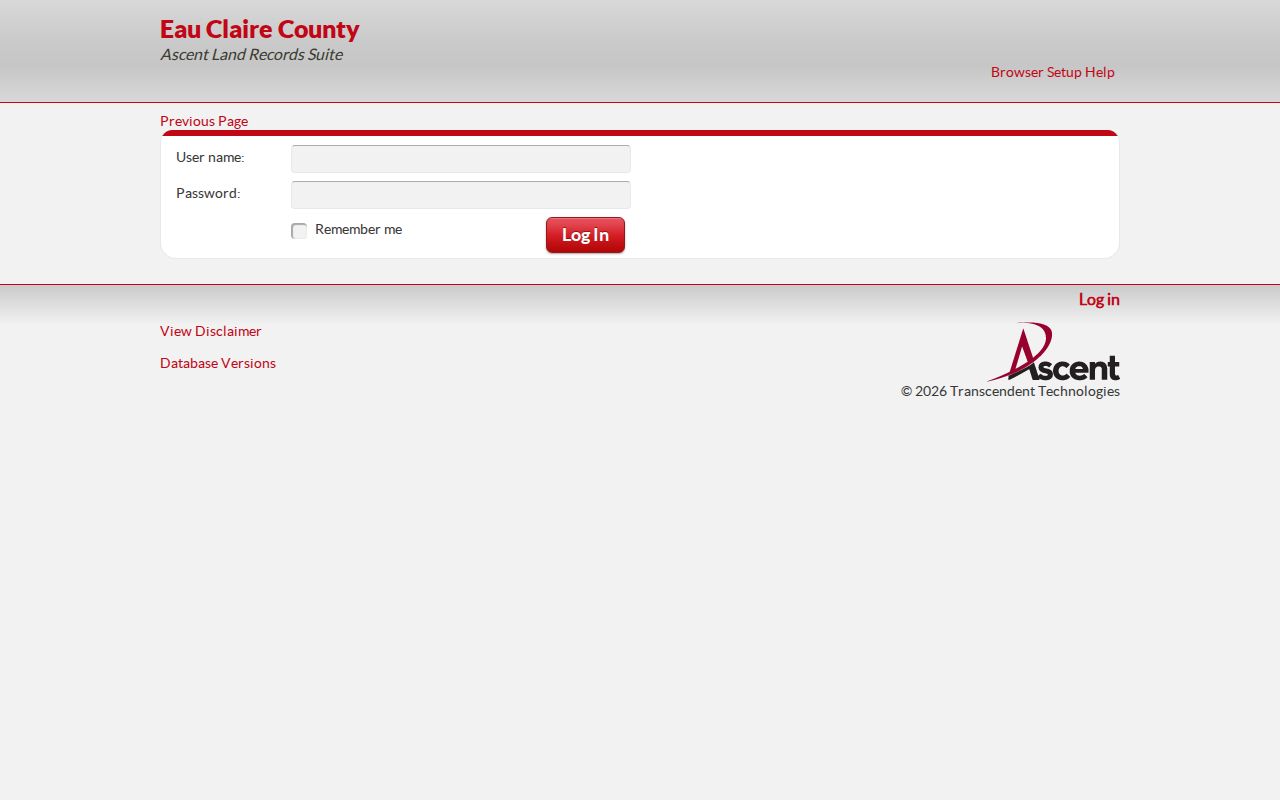
One form gathers the city, street, mailing, owner, and parcel routes into a single screen.
Recorded Eau Claire Name Trails
Deeds, mortgages, liens, satisfactions, and plats all carry names. The Eau Claire County Register of Deeds holds them. A grantor gives up an interest. A grantee takes one on. The office supplies Tapestry as its remote doorway to those recorded documents. Search both roles from home and compare document type, recording date, document number or book and page, and the legal description before drawing conclusions. Remote access can involve a fee or an account step. When an image or an older index entry is missing, the counter and a focused records request still work well. The Eau Claire Tapestry entry documents that access gate rather than promising a free image.
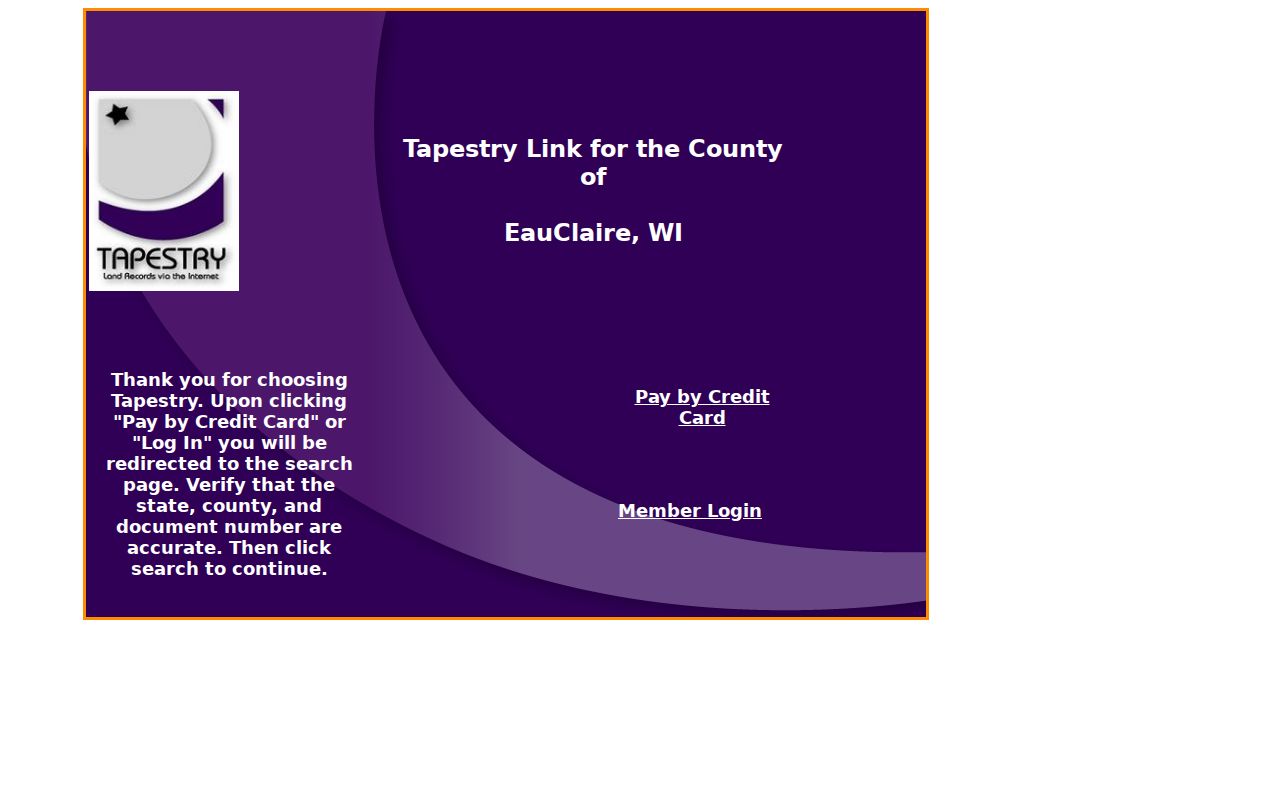
Pull the index trail from the portal first. Then request an official copy when the document itself matters.
Eau Claire Voter Record Limits
Wisconsin Statute §6.36 opens the official registration list to inspection and electronic access by name. Plenty of fields stay protected. Date of birth, driver-license data, Social Security numbers, confidential elector details, identification serial numbers, and voting accommodations are never ordinary public fields. Ballot choices remain private for good. Wisconsin does not register voters by party either. Public data depends on the lawful file or view used. It can include a name, residential address, status, jurisdiction, and election participation. MyVote Wisconsin asks only for first name, last name, and birth date. Its name search uses no other details. Its separate address form takes street address, unit, city, and ZIP. It returns election information, not a public roster of everyone on the street.
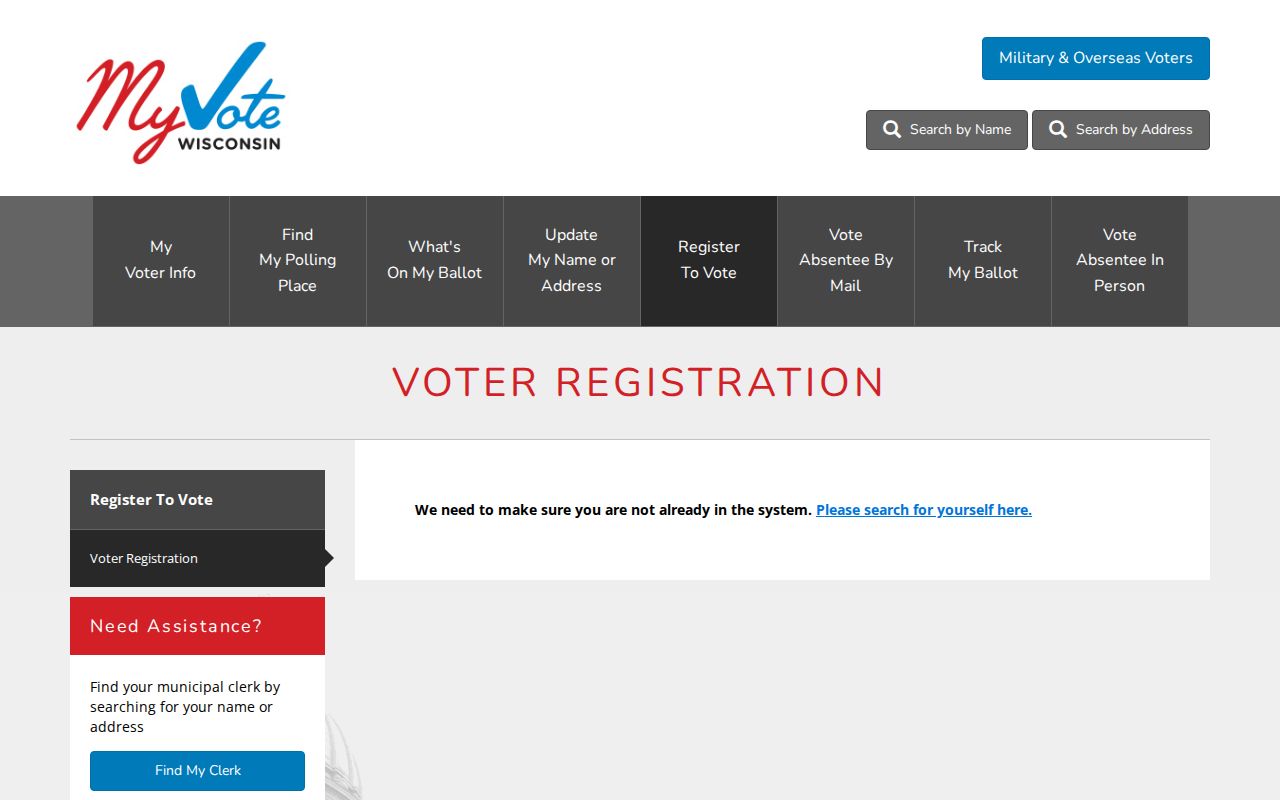
It separates personal lookups from Badger Voters data requests.
Current Eau Claire Resident Rolls
No single list captures everyone in Eau Claire. Each public record serves a different legal purpose. The fields you can see depend on which one you open. Property rolls name owners of parcels, while voter rolls cover registered electors and nothing more. Deeds record the parties to recorded instruments. Organization directories list only an affiliation. Pick the Eau Claire source whose public fields match your question. Then keep the record date and its custodian with whatever you find.
| Source | Who It Lists | Keeper | Access |
|---|---|---|---|
| Beacon and Ascent | Parcel owners | City Assessor and county land records | Free public portals |
| MyVote and Badger Voters | Registered voters | Wisconsin Elections Commission | Personal lookup or paid filtered file |
| Tapestry deed index | Recorded-document parties | Register of Deeds | Remote service, counter, or request |
| WCCA | Parties in public circuit cases | Wisconsin Court System | Free case summaries |
| DFI and DSPS | Business and credential affiliations | Wisconsin agencies | Free public search |
Commercial people-finder reports mix stale data. Names merge and facts drift, so a report is no substitute for an official roll. The Eau Claire resident lookup workflow shows how to test one person against two independent custodians who keep the record firsthand.
Read Eau Claire Court Matches
Wisconsin Circuit Court Access searches public circuit-court summaries statewide. Useful fields include party name, business name, case number, county, case type, and filing date. A result may also show the party role, caption, charges or claims, disposition, judgments, and register of actions. A docket is different. It is the dated list of activity in one case, not every document filed there. Start statewide first. Then narrow the results to Eau Claire County. A same-name result still needs confirming. Pin it down with a middle name, a date, a case number, an address when lawfully displayed, or another stable fact. Municipal citations may sit with the City of Eau Claire Municipal Court instead. That court is separate. Older files and copies come from the local Clerk of Courts. Sealed, juvenile, adoption, and other restricted matters never appear as ordinary public results. The WCCA public search below is a case index, not a current-address directory.
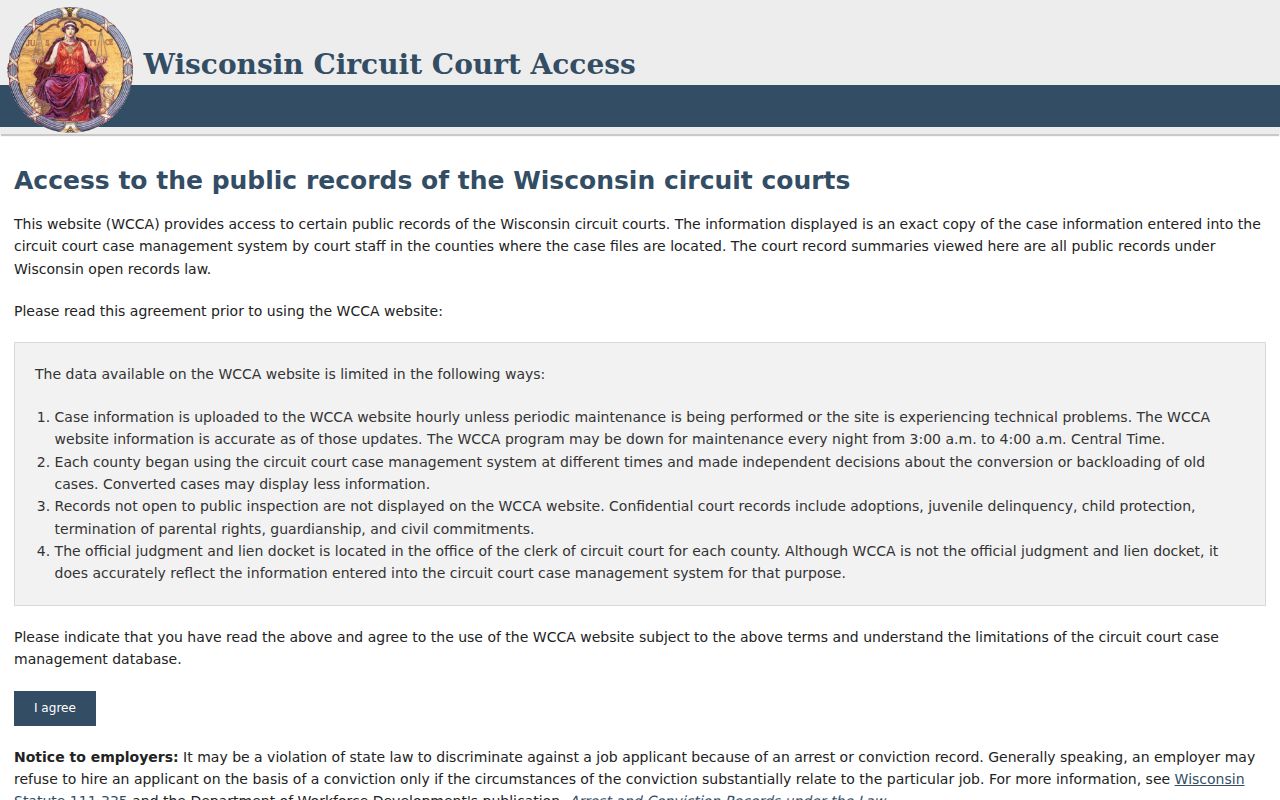
Read county, party role, filing date, and disposition first. Trust a caption only after those line up.
Request Wisconsin Vital Records
Wisconsin publishes no statewide vital-record name index online. Instead, the Eau Claire County Register of Deeds and the Wisconsin Department of Health Services issue records through applications governed by identity and eligibility rules in Wisconsin Statutes chapter 69. County registration reaches back a long way. Births start in 1870, deaths in 1876, and marriages in 1857. Both state and county offices issue Wisconsin events from October 1907 forward, with record-specific genealogy periods and restrictions. Fees are modest. The local office charges $20 for the first copy and $3 for an additional copy ordered at the same time. A divorce certificate is not the court decree. Eau Claire County routes divorce certificates from January 1, 2016 forward through vital records, while older divorce detail may require the court file. Applications go through the documented state and local channels. A scheduled state genealogy visit is another option for qualifying historical searches. The Wisconsin DHS application forms page sits below.
Separate forms guard each record type's eligibility checks. A general name search cannot bypass them.
When Eau Claire Portals End
Wisconsin Public Records Law, Wisconsin Statutes §§19.31–19.39, provides the request route when a record is not already posted. No fixed deadline applies. The custodian must respond as soon as practicable and without delay, subject to applicable exceptions and the balancing test. Ask for a known record instead. Offices rarely build new lists on demand. A strong request names the office, record type, name or address, date range, and preferred format. Older files wander. Ask whether a file moved to the UW–Eau Claire Area Research Center, the Wisconsin Historical Society, or microfilm. Seek the legal reason if denied or redacted. Wisconsin DOJ publishes a compliance guide. Section 19.37 spells out enforcement, and counter service, phone guidance, mail forms, library help, and archive visits remain part of the Eau Claire residents directory even when the first web search fails.
Protected Eau Claire Addresses
Safe at Home is a Wisconsin DOJ program. It gives qualifying people who fear for their safety a substitute legal address and mail forwarding. Confidential-elector rules add cover. Those election-law provisions keep the actual address and name from normal public inspection. This is not an ordinary opt-out. It is a safety-based statutory protection under Wisconsin Statute §165.68 and related election-law provisions.
Never defeat a substitute address. Do not infer hidden locations either. When your own information is wrong, contact the record custodian, because the office that created the record controls correction, redaction, and release.
Historical Eau Claire Resident Directories
Eau Claire's directory shelf starts in 1880. The volumes live at UW–Eau Claire Special Collections. Digitized directories from 1880 through 1923 sit in the Chippewa Valley History collection, alongside yearbooks, histories, and periodicals. Publisher runs vary. Directory Co., R. C. Brackett, R. L. Polk, and Wright editions appear rather than one seamless series. Annual gaps matter. Record the publisher, year, page, exact spelling, occupation, spouse or widow notation, and street address. The Lois Barland Genealogy Room adds more. At L.E. Phillips Memorial Public Library, it holds newspaper microfilm, Sanborn maps, obituary and cemetery indexes, and marriage transcriptions. UWEC keeps directories, maps, census and atlas microfilm, manuscripts, and yearbooks in its reading room, and these records can separate owners from occupants while bridging census years. The Eau Claire city directory page maps the full collection and its reading method. Chippewa Valley History supplies the digitized directory run below.

Nearby sources confirm a historical identity. School and community records sit beside the directories themselves.
Eau Claire Archives Beyond Directories
UW–Eau Claire's McIntyre Library Archives and Area Research Center holds local manuscripts, maps, photographs, and government records. It also keeps yearbooks and regional archival collections. Yearbooks reach deep. Eau Claire high-school yearbooks span 1900 through 1923 in the cited digital collection. The UWEC Periscope run extends from 1917 through 1995. Same names abound. School activities, graduation years, organizations, and later obituaries can help separate people who share one. The UWEC archives collections page describes the broader shelf below.
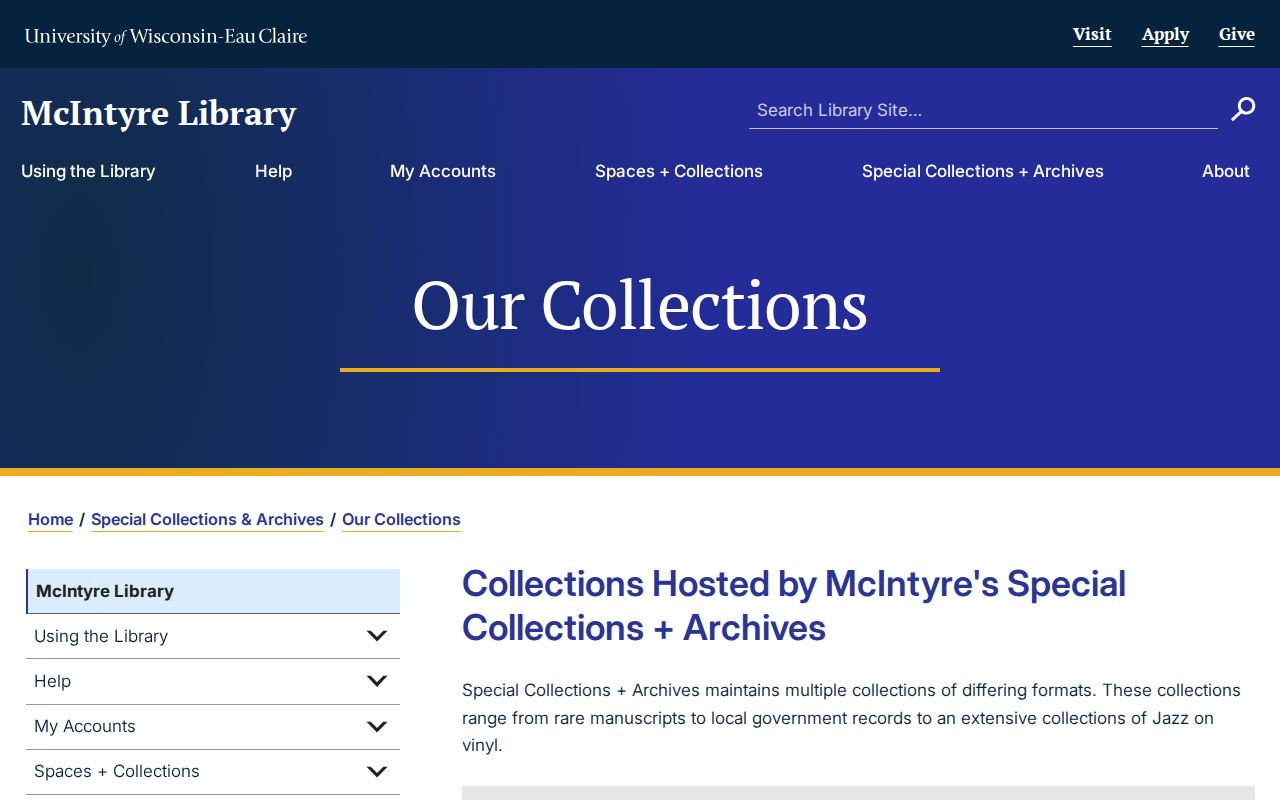
Archive staff in Eau Claire can field questions from a distance and point you toward the right record series. Some holdings, though, only surface in person, and reproduction fees may apply to copies you order.
Verify Eau Claire Record Matches
A solid Eau Claire record match rests on two independent anchors, never one. Pair a parcel's legal description with a deed number. Or match a court case number with a party role. A residents directory entry gains weight when an address lines up with a spouse. An occupation can serve the same purpose. An obituary date confirms best beside a cemetery record.
Each records office updates on its own schedule. A tax-year owner, a recorded deed party, a voter roll name, and a residents directory occupant can all be correct for different dates in the same year.
- Parcel
- A defined piece of land identified for assessment and mapping.
- Index
- A finding aid that points to a record; it may not include the full image.
- Roll
- An official list maintained for a limited public purpose, such as tax or voter administration.
- Criss-cross directory
- A historical directory arranged by address or telephone number rather than only by surname.
Conflicting sources call for care, not shortcuts. Resist picking the Eau Claire result that simply looks closest. Test spelling variants, suffixes, former names, jurisdiction, dates, and the original custodian of each record.
Local history matters here too. Eau Claire grew from separate river settlements before incorporating in 1872. An early city directory or deed may therefore carry East, West, or North Eau Claire labels. That naming legacy explains many failed searches. It does not excuse a guessed identity in a resident lookup.